The Interstate Highway System
The Federal-Aid Highway Act of 1956 funded a national network of limited-access roads. The system accelerated travel and commerce while also displacing communities and reshaping towns and cities.
Chapter 7
Cars and Transportation
Tour the highways, family cars, filling stations, rail journeys, buses, and expanding air travel that changed how Americans moved in the 1950s.
Inside the chapter
All 7 named subjects from this chapter are included below.
The Federal-Aid Highway Act of 1956 funded a national network of limited-access roads. The system accelerated travel and commerce while also displacing communities and reshaping towns and cities.
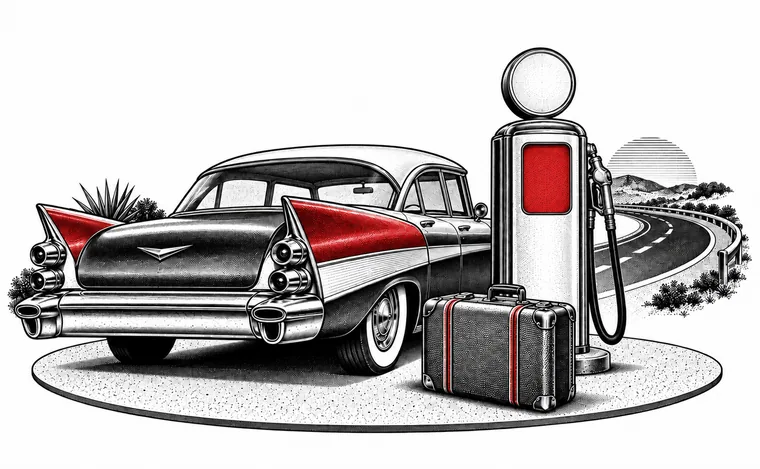
Chrome, two-tone paint, wraparound windscreens, and dramatic tailfins made many cars instantly recognisable. Manufacturers sold not only transportation but status, optimism, and annual style changes.
Large sedans and station wagons carried children, groceries, luggage, and holiday equipment. The particular family car often becomes a strong memory of colour, upholstery, smells, and seating arrangements.
Better roads encouraged longer journeys to national parks, relatives, motels, roadside attractions, and new destinations. Maps, games, packed food, arguments, and unexpected stops were all part of the experience.
Attendants pumped fuel, checked oil, cleaned windscreens, and sometimes offered maps or mechanical help. Brand signs and station architecture became familiar roadside landmarks.
Cars did not replace other forms of travel. Streamlined trains, intercity coaches, and expanding commercial aviation offered different experiences of distance, service, and speed.
The decade’s vehicles remain powerful symbols because their design was highly visible and varied. Personal memories add another layer: a first driving lesson, a family journey, or a car someone loved.
Optional companion material
A free one-time Resource Pass unlocks every companion video and trusted historical link on this browser. Press Play to load privacy-enhanced video.