The Milkman and Household Routines
Regular deliveries could bring milk, bread, coal, newspapers, or other goods to the doorstep. Daily life followed dependable routines shaped by local services, household work, and familiar faces.

Chapter 10
Everyday Life and Slang
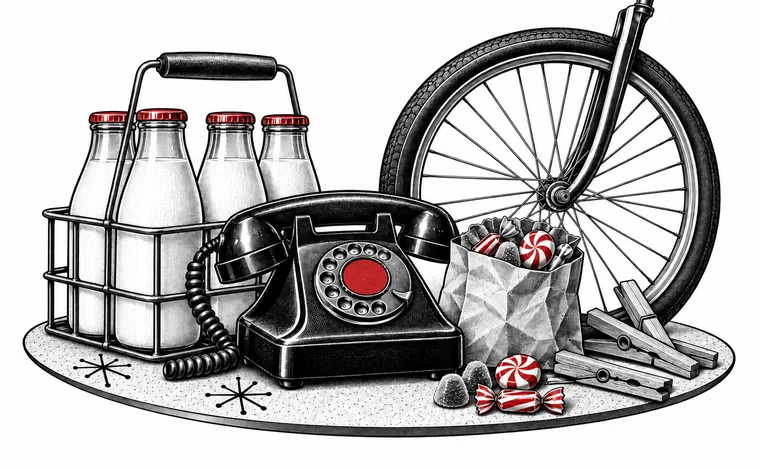
Recall neighbourhood routines, school days, small shops, telephone calls, household deliveries, and the everyday language of 1950s America.
Inside the chapter
All 5 named subjects from this chapter are included below.
Regular deliveries could bring milk, bread, coal, newspapers, or other goods to the doorstep. Daily life followed dependable routines shaped by local services, household work, and familiar faces.
Many families lived on farms or in small rural communities where livestock, gardens, weather, local shops, party lines, and the planting and harvest seasons shaped daily routines. Country memories offer an important counterpart to stories of cities and growing suburbs.
Shared telephone lines required patience and privacy, while corner shops provided groceries, conversation, and small treats. These ordinary places and objects often hold the clearest memories.
School routines included handwriting, recitation, assemblies, playground games, and strict classroom expectations. Clubs, churches, scouts, recreation centres, and informal groups extended social life beyond the school day.
Expressions such as “cool,” “daddy-o,” and “made in the shade” are strongly associated with the period, though usage varied. Remembered language can open conversations about friends, music, humour, and belonging.
Optional companion material
A free one-time Resource Pass unlocks every companion video and trusted historical link on this browser. Press Play to load privacy-enhanced video.