Changes in the American Kitchen
New appliances, fitted cabinets, colourful surfaces, and labour-saving claims shaped the ideal postwar kitchen. The reality still involved substantial daily work, often performed by women.

Chapter 6
Food and Household Life
Revisit changing kitchens, convenience foods, family meals, household work, and the 1950s recipes that still carry strong memories.
Inside the chapter
All 9 named subjects from this chapter are included below.
New appliances, fitted cabinets, colourful surfaces, and labour-saving claims shaped the ideal postwar kitchen. The reality still involved substantial daily work, often performed by women.
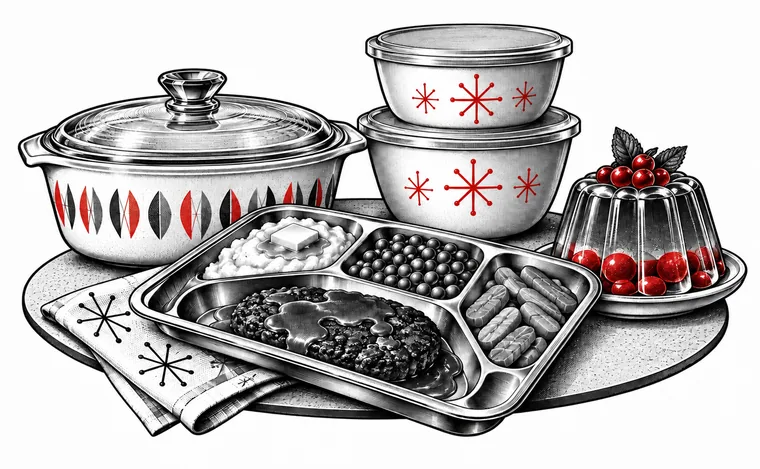
Frozen dinners, cake mixes, canned soups, and packaged ingredients promised predictable results and less preparation. Advertising linked convenience with modernity and family care.
Casseroles stretched ingredients and brought meat, vegetables, sauce, and starch into one dish. Church suppers, potlucks, and family tables made them a practical staple.
Gelatine appeared in colourful desserts and savoury salads, sometimes holding fruit, vegetables, or meat. Moulded dishes reflected an enthusiasm for presentation and packaged convenience.
Hearty meat dishes anchored many family meals, though menus varied greatly by region and household. Sunday dinner could mark time, gather relatives, and preserve family recipes.
Home demonstrations turned plastic storage containers into both a product and a social event. The party model also created business opportunities for women outside conventional workplaces.
Automatic machines reduced some heavy labour but did not erase sorting, drying, ironing, folding, and mending. Laundry days remain vivid memories of sound, steam, weather, and household rhythm.
Kitchens were workrooms, gathering places, and settings for teaching recipes or sharing news. Memories of food often include the person who prepared it and the room in which it was served.
Taste and smell can recall people and places with unusual force. A simple dish may carry memories of safety, celebration, scarcity, family tradition, or a particular cook.
Optional companion material
A free one-time Resource Pass unlocks every companion video and trusted historical link on this browser. Press Play to load privacy-enhanced video.