
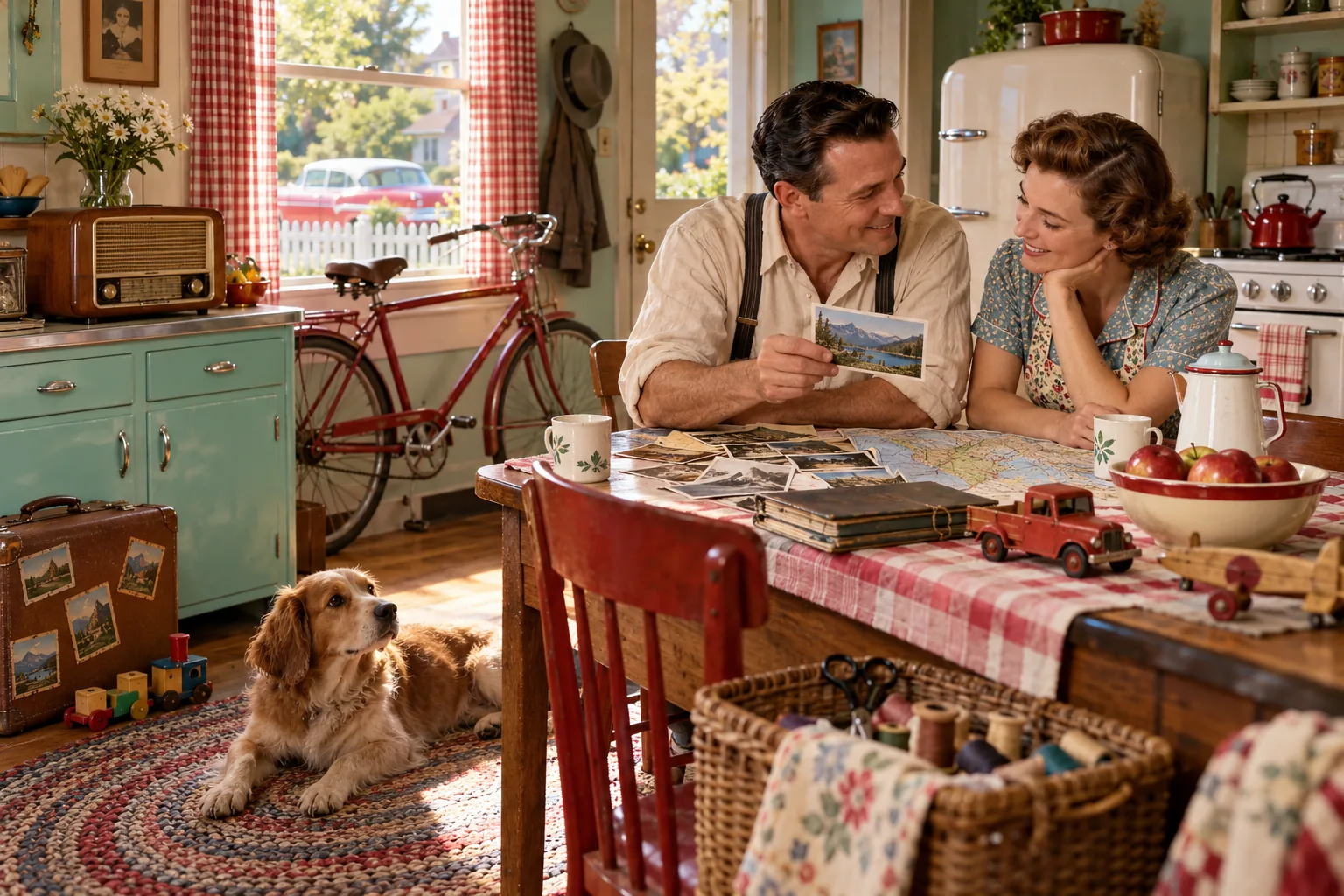
The 1950s are often presented through famous performers, political events, and shiny consumer goods. Everyday life was more varied. Place, income, culture, age, work, and family all shaped what people experienced.
These ten themes help a conversation move from general history to personal detail. Ask what was familiar, what was different, and what the popular picture leaves out.
1. Radio and recorded music
Radio remained central in many homes even as television grew. Ask where the set stood, who chose the programme, what music was bought, and whether listening was a family or private activity.
2. The arrival of television
Some households owned a set early; others watched with neighbours or continued to prefer radio and cinema. Talk about the room, viewing rules, reception, and how evenings changed.
3. Kitchens and changing food
Traditional recipes sat beside packaged ingredients, new appliances, and convenience foods. Ask who cooked, where shopping happened, which meal marked the weekend, and what counted as a treat.
4. Clothes for work and home
Real wardrobes included uniforms, overalls, aprons, school clothes, mended garments, hand-me-downs, and special outfits. Explore comfort, expectation, sewing, shoes, hair, and the shops people used.
5. Cars, buses, trains, and bicycles
Not every family had a car. A first vehicle may be memorable, but so may a daily bus, bicycle route, railway journey, or long walk. Maps and tickets can prompt detailed stories.
6. Toys, games, and outdoor play
Play could involve bought toys, shared games, homemade equipment, comics, collections, or imagination. Rules often differed by street or school. Invite people to explain their version.
7. Work and first wages
Ask about finding work, training, uniforms, time clocks, colleagues, pay packets, lunch breaks, and journeys to the workplace. Include unpaid domestic and caring work in the conversation.
8. Shops and high streets
Markets, local specialists, department stores, catalogues, delivery rounds, and growing self-service all belong in the picture. Ask how goods were wrapped, carried, saved for, and repaired.
9. Home routines
Heating, washing, cleaning, bathing, telephones, and household repairs reveal how daily time was spent. Avoid suggesting that everyone owned the newest appliance or lived in the same kind of home.
10. Weekends and celebrations
Sport, worship, cinema, dances, clubs, family visits, gardening, and day trips gave the week its rhythm. Birthdays and holidays may have involved traditions that still continue.
Keep the conversation open
Use photographs and objects to invite observation, not to prove a fact. Someone can say, “That was nothing like my house,” and offer valuable history through the difference.
Explore all ten subjects in the Memory Lane Chronicles 1950s edition, with separate US and UK companion pages that make room for different experiences.
Choose depth instead of covering all ten
One theme can fill a complete visit. Select it with the person or group, then use one picture, one object, and three open prompts. Save the remaining themes for future sessions.
Moving slowly allows regional and family differences to appear. It also prevents the decade from becoming a rapid list of famous products and events.
Add local and family evidence
Pair a general history page with a copied family photograph, local map, shop image, work record, recipe, or transport ticket. Ask what matches and what does not.
Label uncertain dates as approximate. Personal accounts and published history can sit together without forcing one to prove the other.
Avoid a single “typical” 1950s
Life differed by country, region, culture, race, class, religion, disability, age, and family circumstance. Use phrases such as “some households” rather than claiming that everyone owned or did the same thing.
Invite correction and contrast. “That was not how it was for us” is valuable evidence, not a disruption to the activity.
Turn themes into a series
Create a ten-session programme and let participants choose the order. Keep a shared page for each theme containing preferred images, comments given with permission, and ideas for related music or objects.
At the end, review the pages and ask which subject deserves a return visit. The series then grows from participants’ interests rather than a fixed lesson plan.
Use reliable context without overwhelming the story
When a historical question arises, note it and check a museum, archive, library, broadcaster, or other established source after the conversation. Bring back one clear answer next time. Avoid searching continuously while someone is speaking. The person’s account and the historical reference serve different purposes: one records lived experience, while the other helps place that experience in context. Both can be valued without turning the session into a fact-checking exercise.