
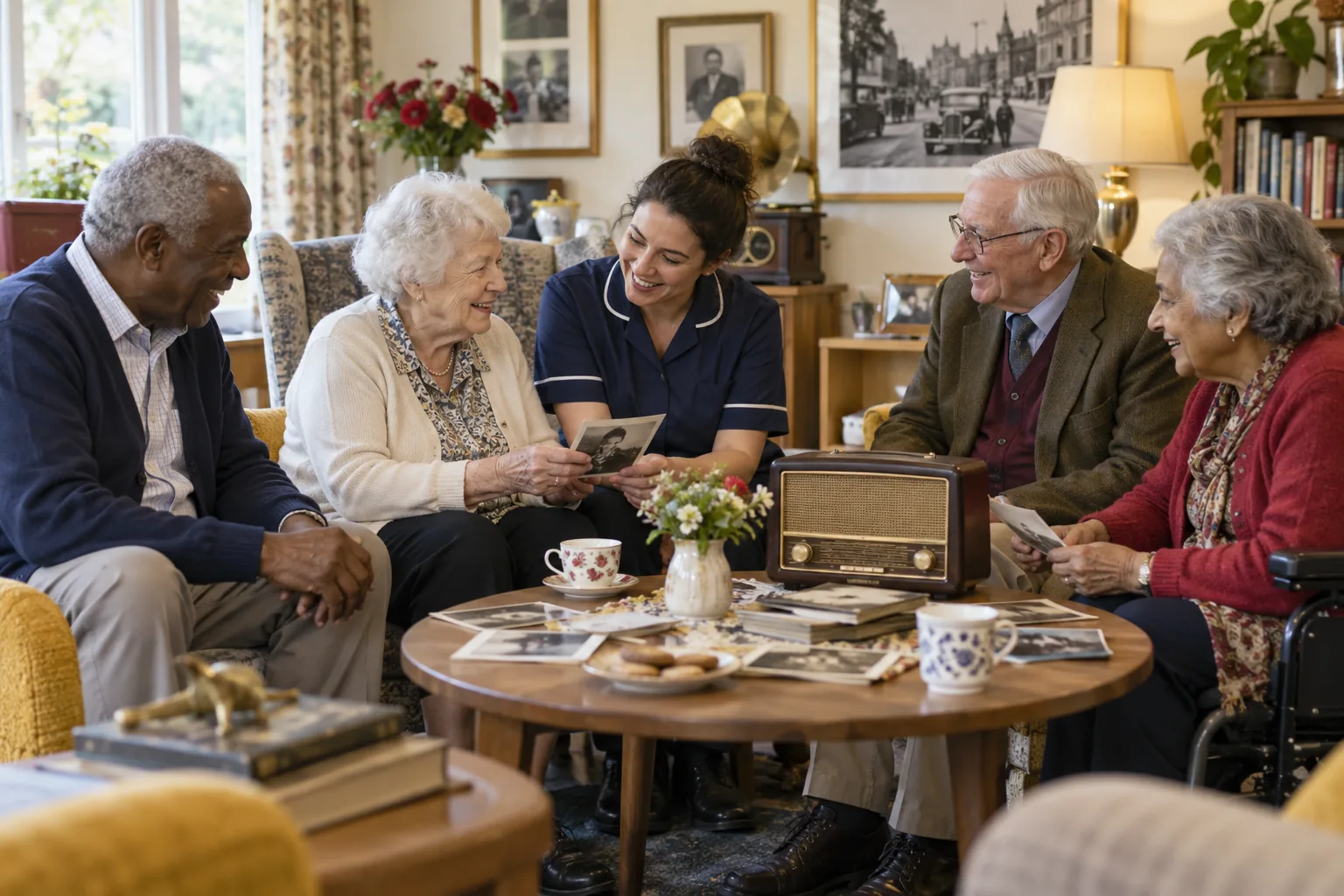
This simple session needs one chapter, a short video, and three or four questions. Preview the material first and adapt the pace to the group.
Minutes 0–5: welcome
Introduce the theme and reassure everyone that there are no scores. Show the chapter illustration and invite first impressions.
Minutes 5–15: three prompts
Choose three broad prompts. Ask about sights, sounds, people, and routines rather than demanding names and dates. Let one story lead naturally to another.
Minutes 15–22: watch or listen
Use one of the related videos. A short performance, advert, or archive clip usually works better than a long documentary. Pause if someone begins to talk.
Minutes 22–30: close together
Ask what stood out and what theme the group would like next time. Finish with a familiar song, image, or positive observation.
What to prepare before the group arrives
Choose one 1950s theme rather than trying to cover the whole decade. Music, kitchens, television, travel, fashion, school, work, or games can each fill a session. Mark two or three useful pages in advance and prepare no more than five main questions.
Add one optional sensory prompt. This might be a short song, a clean household object, a fabric sample, a postcard, or a familiar sound. Preview every audio or video clip, set the volume, and remove adverts or distracting material where possible.
Arrange the room for conversation
Seat people where they can see both the facilitator and one another. Reduce background television, music, and unnecessary movement. Place pictures on firm card or a stand so nobody has to hold them.
A group of four to eight people often allows more time for individual contributions, but larger groups can work when there is enough support. Leave a clear route for anyone who wants to arrive late, move seats, or leave early.
A detailed 30-minute running order
- 0–5 minutes: welcome everyone, name the theme, and explain that there are no right answers.
- 5–12 minutes: show one strong image and ask an observation or preference question.
- 12–18 minutes: introduce a second prompt and follow any personal story that emerges.
- 18–23 minutes: play a short piece of music or share one safe object.
- 23–27 minutes: invite comparison, movement, humming, choosing, or another non-verbal response.
- 27–30 minutes: return to a favourite prompt, thank the group, and preview the next activity.
This timetable is a guide, not a test for the facilitator. If a useful conversation begins in minute eight, stay with it and omit a later prompt.
Questions that suit a mixed group
Try “What catches your eye?”, “Who might have used this?”, “Would this have been common where you lived?”, or “What feels most different today?” These questions welcome experience, opinion, and imagination.
Avoid assuming that everyone experienced the 1950s in the same country, community, or household. Invite differences without asking someone to represent an entire culture or generation.
Include several ways to take part
Speaking is only one form of participation. Someone may listen, smile, tap a rhythm, select a picture, pass an object, or watch the group. State these options openly so that quiet participation does not appear to be failure.
When hearing or vision varies, describe images aloud, face the group while speaking, and use one voice at a time. Repeat a participant’s words only when it helps others hear, and check that you have understood correctly.
Respond when the energy changes
If attention drops, reduce the number of choices or introduce a familiar sound. If the group becomes lively, allow conversation while making sure one person does not dominate. If a memory causes discomfort, pause and offer a change of subject without asking for more detail.
Have a neutral closing option ready, such as a well-known tune, a simple picture, or a cup of tea. The ending should feel steady rather than abrupt.
Make the next session easier
After the group, note which prompt worked, which material was ignored, and what topic people requested. Record preferences rather than private stories unless your setting has permission and a clear reason to keep them.
Repeat the same structure with a new theme. Familiar timing can help participants feel secure, while different pictures, sounds, and objects keep the activity fresh.
Keep a one-page facilitator card
Write the running order, five prompts, media timings, comfort checks, and closing choice on one large, clear page. This reduces the need to look through notes while people are speaking. Add the name of a colleague who can help if someone wants individual support. After the session, mark only what should change next time. A short practical card is more useful than a detailed script because it keeps the facilitator’s attention on the group.