
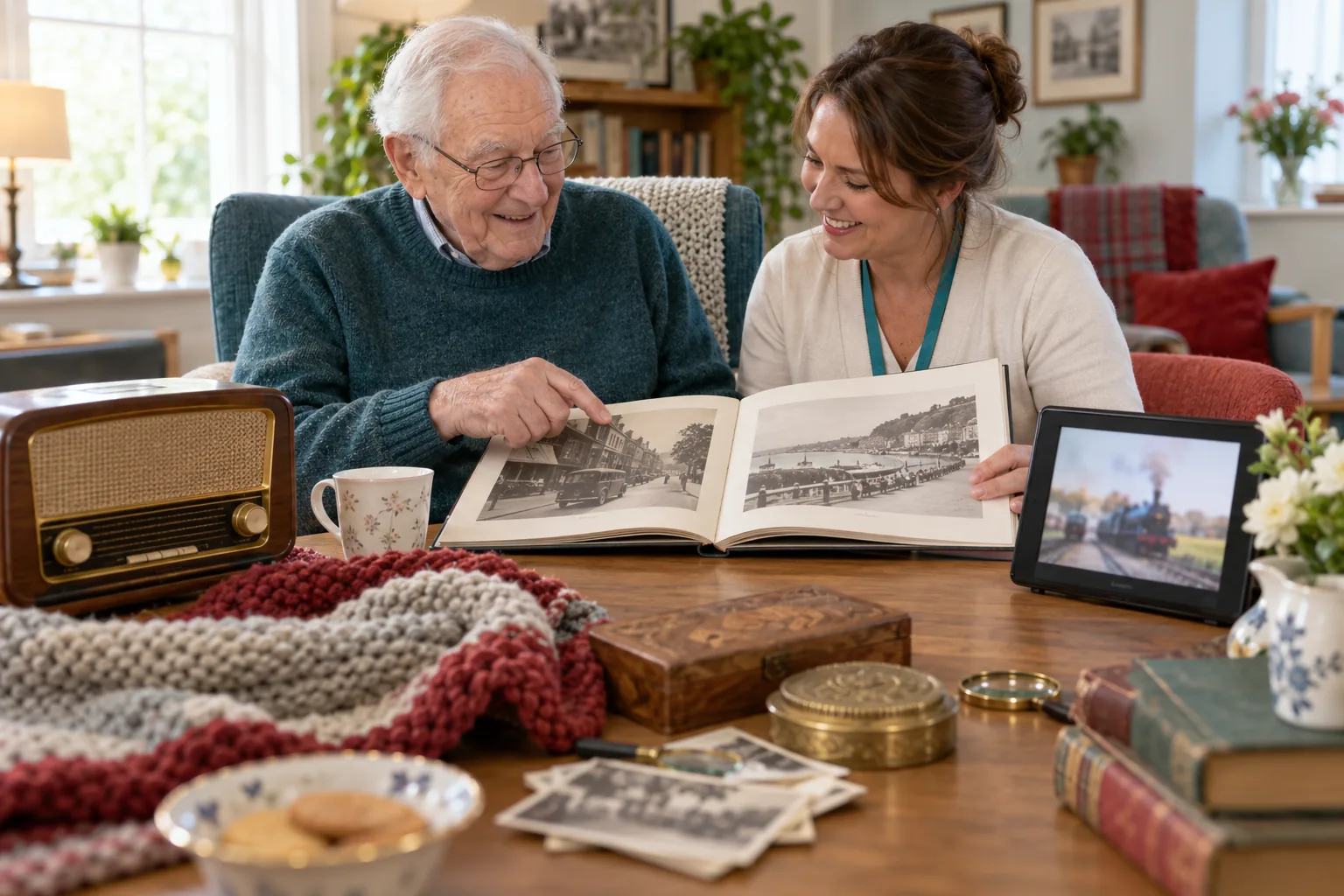
A book can begin a conversation. Music may add feeling, a short video may provide movement, and a familiar object may bring texture. Used carefully, these elements give people several ways to take part.
The aim is not to fill every moment with stimulation. A successful multi-sensory session is selective, paced, and easy to leave or pause.
Choose one theme and one purpose
Decide what the session is for. You may want a relaxed conversation, gentle movement, individual choice, or a shared group experience. Then select a theme such as radio, holidays, kitchens, sport, or fashion.
One clear theme helps the materials feel connected. It also makes it easier to notice which kind of prompt works best.
Begin with print
Open a large-print book to one strong image or short section. Give everyone time to look before asking a question. Describe the image aloud for anyone who may not see it clearly.
Try an opinion prompt: “What catches your eye?” or “Would this have been useful?” Opinion is often easier than recalling a name or year.
Add a short piece of sound
Play 30 to 90 seconds of music, a radio theme, or an everyday sound. Keep the volume comfortable and warn the group before it begins.
Pause afterward. Someone may hum, move, speak, or need time. Avoid talking over the sound and the response it creates.
Use video as a prompt, not the whole session
A short clip can show movement, clothing, streets, or performance. Preview it for unsuitable content, abrupt volume changes, captions, and length. Seat people where the picture is easy to see.
Stop after a minute or two and return attention to the group. Ask what they noticed rather than testing names and dates.
Offer one safe object or texture
Pass around a postcard, fabric, wooden utensil, record sleeve, clean tool, or another object linked to the theme. Provide a tray or table so nobody has to hold it.
Check for sharp edges, weight, allergies, infection risks, and small parts. A photograph of an object is a valid alternative.
Watch for signs to slow down
Turning away, closing the eyes, repeated questions, agitation, or sudden quiet may mean the session is tiring or uncomfortable. Reduce the number of prompts, lower the volume, or offer a break.
People can join by watching or listening. Do not insist on handling an object, singing, or answering.
End with something familiar
Return to the first image or replay the most positively received sound. Summarise one or two things the group chose to share, without claiming that everyone had the same experience.
The Memory Lane companion pages bring books, videos, and trusted links together by topic. Choose only the resources that serve the people in front of you.
Plan a simple sensory sequence
- Show one image and allow quiet looking.
- Ask one observation or preference question.
- Play one short sound linked to the image.
- Offer one safe object or texture.
- Pause for conversation or rest.
- Choose whether to repeat, continue, or finish.
This sequence gives each prompt space. It also makes it easier to identify which element supported interest or created discomfort.
Create a low-technology backup
Internet connections, screens, and speakers can fail. Print the key image, download permitted media in advance, and prepare an object-based version of the session.
Technology should support the relationship, not make participants wait while a facilitator searches menus or resolves passwords.
Adapt to sensory preferences
Some people enjoy music but dislike touch. Others prefer objects to screens. Ask, observe, and record preferences according to the setting’s policy. Do not assume that adding more senses makes an activity better.
Avoid strong smells, flashing video, high volume, rapid cuts, and cluttered displays. Offer a quiet seat and make it easy to decline any element.
Review one element at a time
After the session, note which image, sound, texture, or object worked well. If the session felt overwhelming, reduce the number of transitions rather than abandoning the theme.
The best multi-sensory plan is often modest: one clear page, one familiar sound, one safe object, and enough silence for a person to respond.
Give each transition a clear signal
Tell participants before a sound begins, a screen changes, or an object is passed. Simple cues reduce surprise and allow someone to decline. Pause between elements rather than speaking through the transition.