
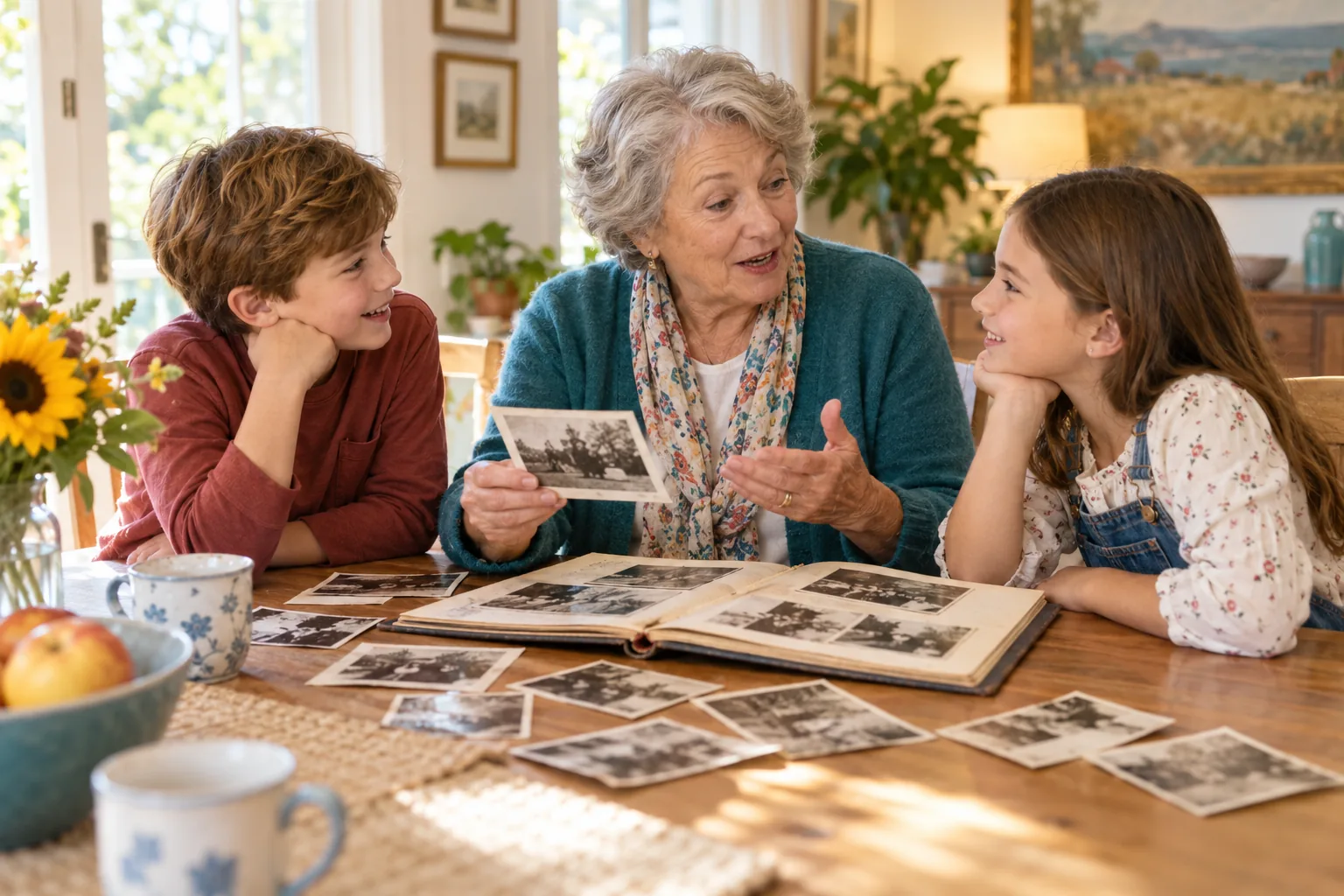
Children are often curious about life before smartphones, streaming, and online shopping. Grandparents may be just as curious about a child’s world. A good conversation gives both generations room to speak.
Use one or two prompts at a time. There is no need to finish the list, remember exact dates, or agree on which era was better. Let one answer lead to the next question.
1. What did a normal school morning look like?
Compare the journey, clothes, packed lunch, classroom, and first lesson. Children can describe their own routine too.
2. What game could you play with almost nothing?
Ask about playground rules, street games, skipping rhymes, cards, or inventions made from everyday objects. If it is safe and practical, try a simple version together.
3. Which sound takes you back?
It might be a radio signature tune, a train, a school bell, a market trader, or a household appliance. Record or imitate the sound and ask the child to choose one from their own life.
4. What food felt like a treat?
Talk about the occasion as well as the dish. Who prepared it? Where was it eaten? Was it bought, grown, saved for, or shared?
5. What job did you imagine doing?
Childhood ambitions can be funny, serious, or surprising. Compare them with the work the person eventually did and with the child’s current ideas.
6. How did your family hear important news?
Radio, television, newspapers, telephone calls, letters, and neighbours all played a part. Discuss how news travels today and how each generation decides what to trust.
7. What did you wear when you wanted to look your best?
Ask about shoes, hair, home sewing, hand-me-downs, school rules, and special occasions. Avoid judging bodies or treating one style as the only “proper” one.
8. Where did you go for an ordinary day out?
A park, beach, cinema, relative’s house, sports ground, or bus ride may hold more meaning than an expensive holiday. Look at a map and find the place together.
9. Which household job did you like least?
This prompt often brings humour. Compare washing, shopping, heating, cleaning, gardening, and caring for pets without suggesting that one generation had an easier life.
10. Who made you laugh?
The answer may be a relative, friend, teacher, performer, or neighbour. Ask what they did and whether any family sayings survive.
11. What object would you put in a family museum?
Choose one item that tells a story: a recipe card, tool, ticket, ornament, photograph, or piece of clothing. The child can nominate an object from today.
12. What would you like us to remember?
This can produce a story, piece of advice, recipe, place name, joke, or family tradition. Keep the question light and accept any answer, including “nothing today.”
Turn the conversation into a keepsake
Write one sentence after each visit, make a small audio recording with permission, or add a copied photograph to a notebook. Keep the process easy. The aim is connection, not a perfect family archive.
A decade-themed book can provide pictures when conversation needs a fresh starting point. Browse the 1950s themes and companion resources, then let grandparent and grandchild decide where to go next.
Help both generations take part
After a grandparent answers, invite the child to compare their own experience. “What happens in your school now?” or “Which object would you save?” turns the exchange into a conversation rather than an interview.
Children can also choose the next question, draw a remembered place, find a location on a map, or select a photograph. Giving them a role helps curiosity feel natural.
Adapt prompts for age and attention
Younger children may respond best to one concrete question and a picture. Teenagers may enjoy change over time, first jobs, technology, rules, independence, and advice. Keep the visit short enough that everyone wants another conversation.
Do not insist that a child sit silently through a long account. A snack, drawing activity, simple game, or short walk can keep the exchange relaxed.
Protect privacy and choice
Ask before recording or sharing a story. Some family history belongs only within the conversation. Avoid asking a grandparent to discuss painful events in front of children unless they choose to do so.
End by letting each person name one thing they enjoyed learning. The goal is not to complete all twelve prompts; it is to make future questions easier to ask.