
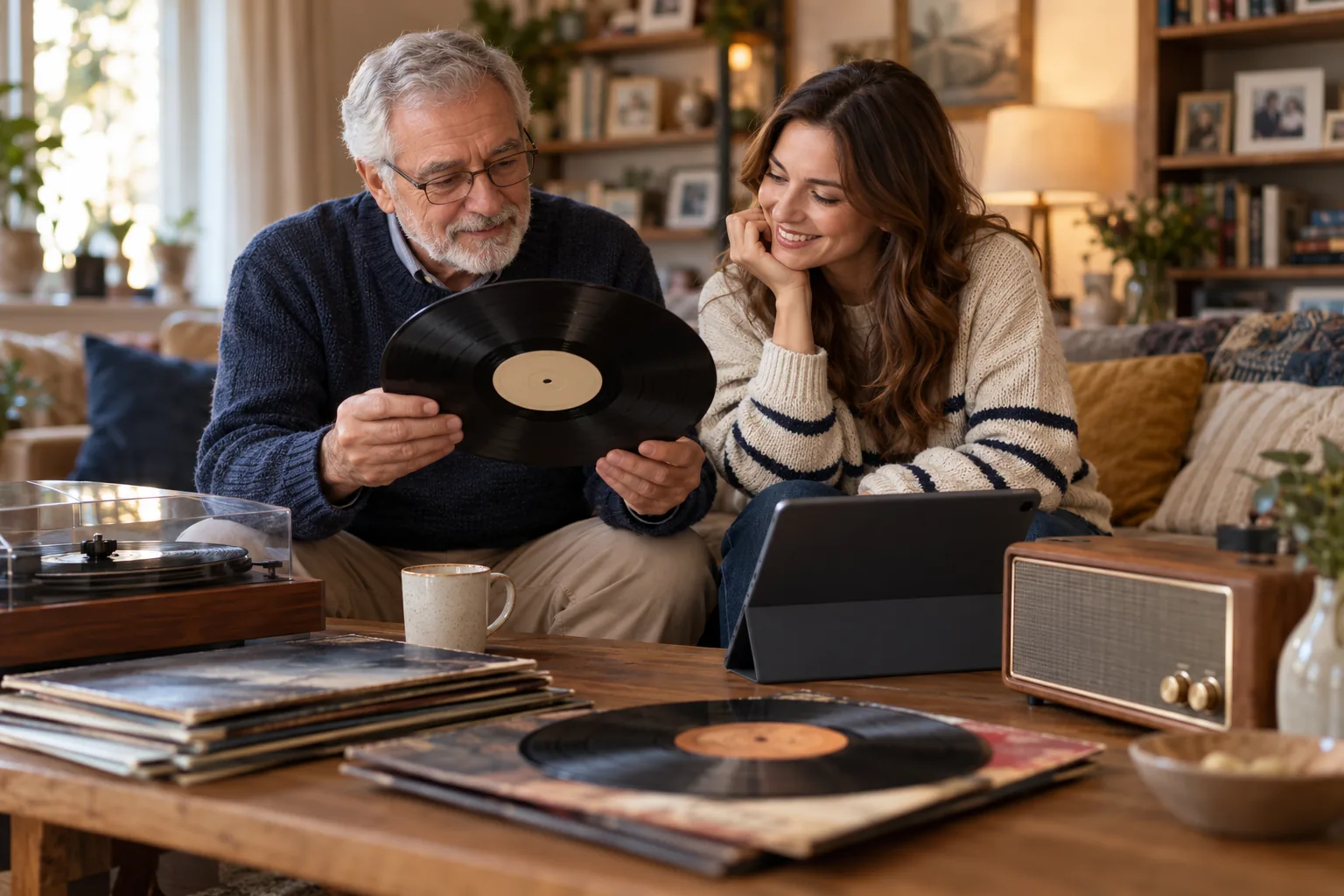
A memory playlist is more useful when it reflects one person’s life rather than a generic decade. Start with a conversation and add songs gradually.
Use life moments
Ask about school days, first work, dances, courtship, weddings, worship, military service, holidays, children, and favourite radio programmes. A song may connect with a place or person rather than a year.
Confirm the version
Different recordings of the same title can feel very different. Check the singer, arrangement, and approximate period when possible.
Record the story
Beside each track, write one sentence about why it matters. The note may become more valuable than the playlist itself.
Keep listening comfortable
Use moderate volume, short sessions, and easy controls. Remove songs that cause distress and revisit the list as preferences change.
Begin with a musical conversation
Ask where music appeared in everyday life: at home, school, work, worship, dances, cinema, military service, celebrations, journeys, or family gatherings. A person may remember a voice or setting before a title.
Use broad prompts such as “What did you sing with other people?” or “Was there music you disliked?” Dislikes help prevent a generic decade playlist from replacing personal taste.
Gather clues from several sources
Photographs, letters, record sleeves, diaries, wedding details, family memories, and old radio schedules may suggest songs. Ask relatives for ideas, but let the listener confirm the choice whenever possible.
Do not assume that age predicts preference. People discover new music throughout life, and a song from outside someone’s youth may carry the strongest connection.
Check the exact recording
The same song may exist in different performances, arrangements, languages, and tempos. Play a short sample and ask whether it sounds right. Note performer and version beside the title.
Avoid relying only on an automated playlist labelled by decade. It may select unfamiliar versions or move suddenly into unsuitable material.
Organise by purpose rather than year
- Welcome: familiar, comfortable songs that make starting easy.
- People and places: tracks linked to family, friends, work, travel, or home.
- Energy: music that invites optional movement or singing.
- Quiet listening: gentler pieces for rest or conversation.
- Closing: a reliable favourite that ends the session steadily.
A playlist can include only eight to twelve tracks. A short, well-understood collection is easier to use than hours of unreviewed music.
Write the story beside each track
Add one sentence explaining why the song matters: “Played on the drive to the coast” or “Sang with sisters while washing up.” Ask permission before recording names or private details.
These notes help family and staff introduce the music naturally. They also prevent a meaningful song from becoming a background track played without context.
Make playback simple and comfortable
Use large, clear controls or prepare the device in advance. Keep the speaker near the listener and begin at moderate volume. Reduce other sound and watch for hearing-device feedback.
Offer a printed track list in large type if useful. Do not require someone to operate unfamiliar technology in order to enjoy the collection.
Listen for response and consent
A track that once brought pleasure may feel different on another day. Stop when asked or when the listener appears uncomfortable. Offer silence or a different song rather than explaining why they should like it.
Music can bring grief as well as joy. Acknowledge emotion without pressing for its cause, and follow care or safeguarding guidance when support is needed.
Review and refresh the playlist
Mark favourites, remove unwanted versions, and add new discoveries. Keep the date of the latest review and a backup that trusted family or staff can access lawfully.
A personal memory playlist is never finished in the way a chart collection is finished. It grows from listening to the person, not from completing a list of famous songs.
Respect copyright and account access
Use lawful music services, purchased recordings, or materials the family is entitled to play. Do not share personal streaming passwords across a care team or publish a private playlist without permission. Write down enough information to find each track on another service if an account changes. A playlist should remain practical without depending on one person’s phone. Clear access arrangements protect privacy and make it more likely that meaningful music will be available when it is wanted.