
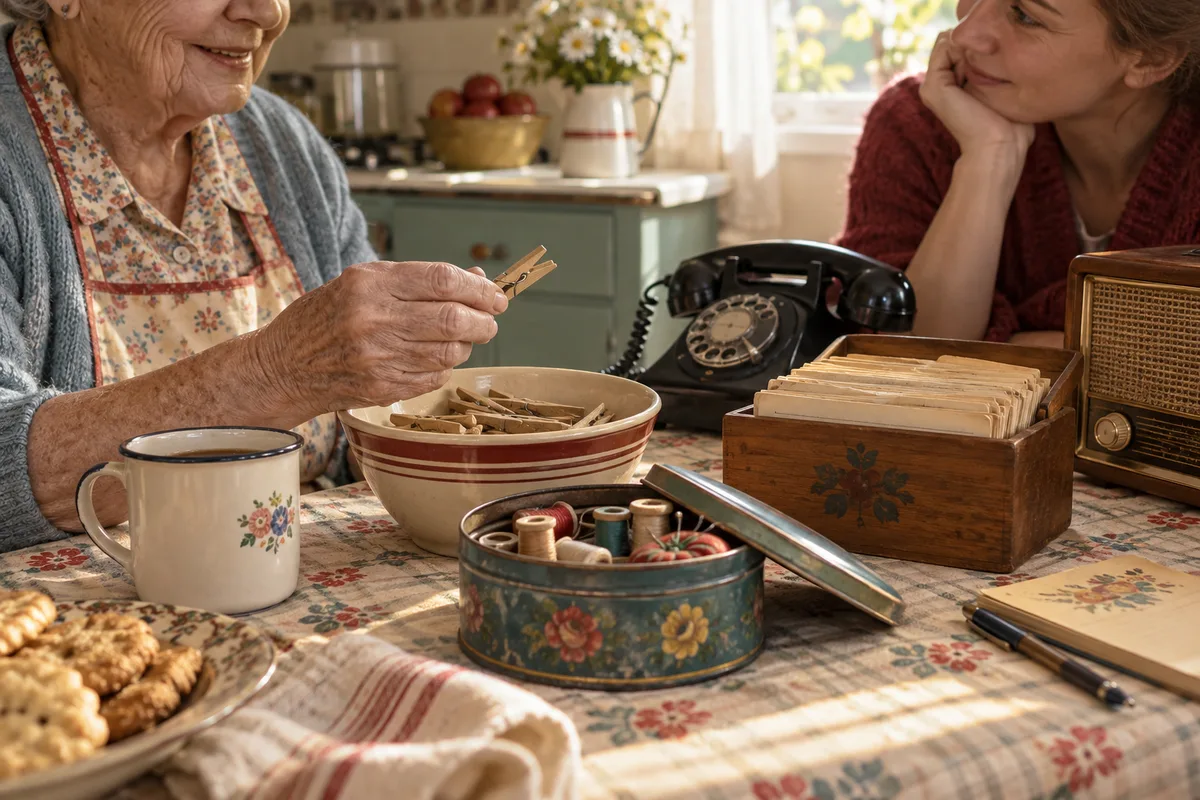
Some of the best conversation starters are already in a kitchen drawer, sewing basket, tool box, or cupboard. A familiar object gives everyone something concrete to notice. It can be held, turned over, compared, or simply looked at. That makes it useful when a direct question such as “What do you remember?” feels too broad or too much like a test.
The purpose is not to identify an item correctly or prove what happened in a particular year. It is to create a comfortable opening for attention, choice, and companionship. A person may remember a detailed story, make a simple observation, or prefer to listen. Each response is a valid way to take part.
Choose objects with more than one way in
Pick three to five clean, safe items that differ in shape, texture, sound, or purpose. Possibilities include a wooden spoon, old-style telephone, recipe card, biscuit tin, handkerchief, tape measure, postcard, record sleeve, shaving brush, or small radio. Replicas and newer versions are perfectly useful. The object only needs to feel recognisable or interesting.
Avoid anything sharp, fragile, heavily scented, electrically unsafe, or valuable enough to cause worry. Ask before bringing in a personal possession. An item connected with bereavement, military service, work, or family conflict may carry difficult feelings as well as warm ones.
Begin with noticing, not remembering
Place one item at a time on a plain cloth or uncluttered table. Give the person time to look before speaking. Begin with an observation or an invitation: “This is heavier than I expected,” “Would you like to hold it?” or “What do you notice about it?” These openings do not demand a correct answer.
If conversation starts, follow the person’s interest. You might ask, “Where would something like this have been kept?”, “Who usually used it?”, “Was there a sound that went with it?” or “Would you have chosen this colour?” Questions about routines and preferences are often easier than requests for names and dates.
Let the object support the conversation
Keep the item visible while people talk. It offers a natural place to rest the eyes and can help the group return to the subject after a pause. In a small group, pass the object only when someone wants it. A participant should never have to hold, smell, or demonstrate anything.
If two people remember an object differently, there is no need to decide who is right. Households, regions, jobs, and generations used things in different ways. Try, “It sounds as though there were several ways of doing that,” then invite both accounts. Difference can enrich the conversation.
Build a simple 25-minute session
- Five minutes: welcome everyone and explain that there are no right answers.
- Fifteen minutes: introduce three objects, allowing about five minutes for each.
- Five minutes: ask which item people would keep for another session and why.
End while attention is still comfortable. A closing choice gives the activity a clear finish and helps plan the next meeting. Write down useful preferences, such as an interest in baking, home repairs, music, or letter writing, but record personal stories only with consent.
Adapt for sight, hearing, and dexterity
Use good, even lighting and a contrasting cloth. Describe the object aloud without giving a quiz. Offer larger, lightweight items for people with reduced grip, and keep background music off while anyone is speaking. If touch is welcome, place the object within easy reach rather than handing it over unexpectedly.
For a remote family call, each person can bring one safe household item to the screen. Take turns showing rather than guessing. The shared activity works best when both generations contribute, so the older person is not treated as the only source of memories.
Follow comfort rather than a script
Guidance from the Alzheimer’s Society notes that photos, music, and objects can support reminiscence and conversation. The National Institute on Aging recommends matching activities to the person, watching for frustration, and allowing someone simply to observe.
Those principles, also reflected in National Institute on Aging activity guidance, matter more than the number of stories produced. If an object brings pleasure, curiosity, or a quiet moment together, the session has done useful work. Put it aside when interest fades, thank everyone for taking part, and leave the door open for another day.