
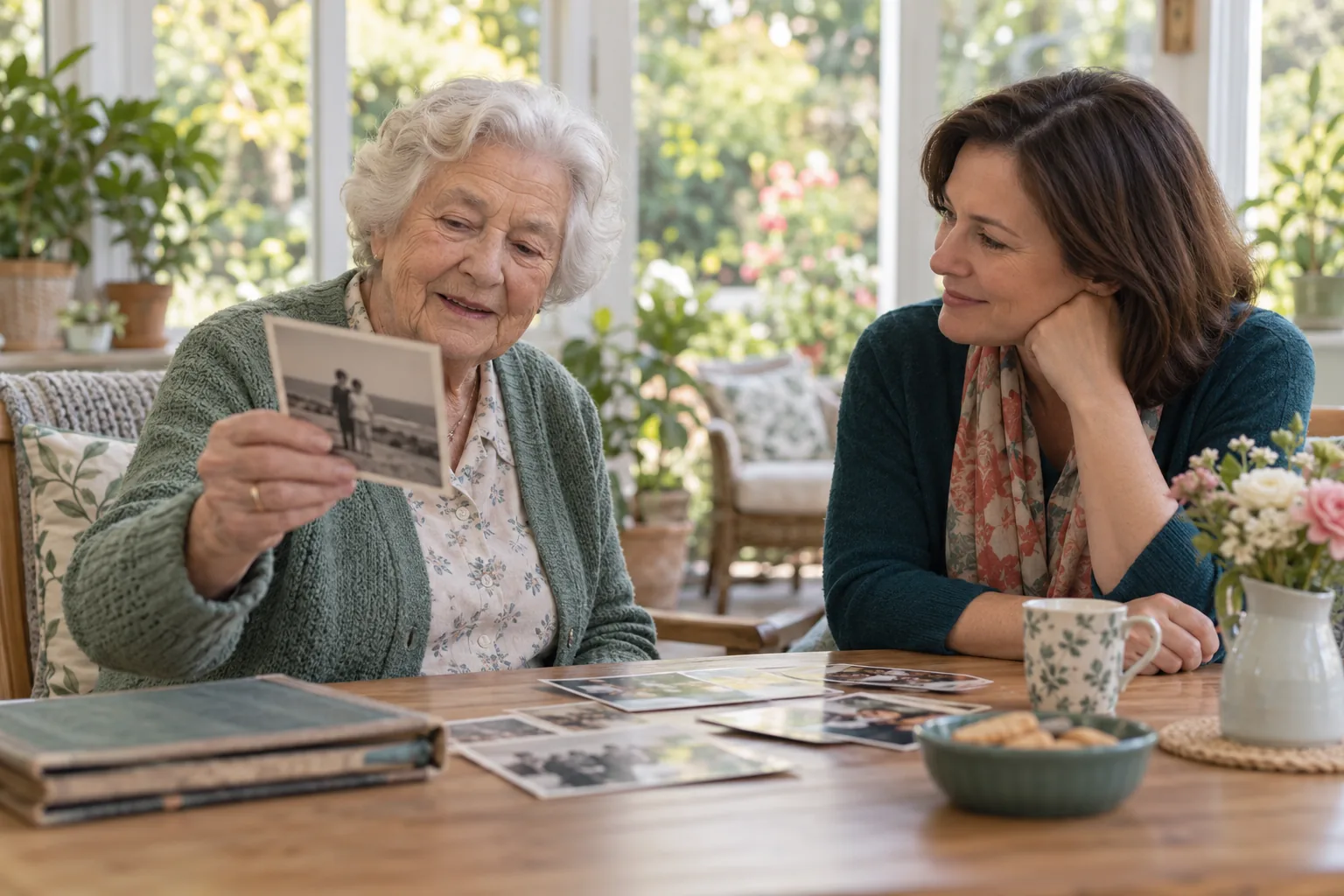
One-to-one reminiscence can be quiet and flexible. There is no group timetable to follow, so the session can respond to one person’s interests, energy, communication, and mood.
The most helpful change is often not a better question. It is a slower pace.
Begin with a choice
Offer two subjects, pictures, or objects: “Would you like music or travel today?” Keep both options visible and allow time to decide.
If choosing is difficult, begin with one familiar item and notice the response. A look, smile, touch, or turning away can guide what happens next.
Use one prompt at a time
Several questions in a row can feel demanding. Ask one short question, then wait. Count silently if you are tempted to fill the pause.
Questions about preference and experience are often gentler than questions about facts. Try “Did you enjoy music like this?” rather than “Who is the singer?”
Let attention move
A person may look at a photograph, then the garden, then return to the photograph. This does not mean the activity has failed. Follow the person’s attention rather than repeatedly bringing it back.
If the conversation moves from a seaside picture to a sister, stay with the sister. The personal connection matters more than finishing the page.
Accept non-verbal participation
Listening, handling an object, humming, pointing, or sharing silence are all forms of participation. Describe what you notice without demanding confirmation: “That red coat stands out to me.”
Avoid speaking about the person as if they are absent. Keep eye contact comfortable and address them directly.
Stop while the experience is still positive
Ten attentive minutes may be enough. Signs of fatigue can include looking away, closing the book, restlessness, or shorter responses. Offer to finish rather than waiting for frustration.
Create a clear ending: close the book, thank the person, and mention the next ordinary activity. A familiar song or cup of tea may provide a gentle transition.
Carry preferences forward
Remember what the person enjoyed and what they declined. In a care setting, record useful preferences according to local policy without turning a private conversation into unnecessary notes.
Use a topic-led resource such as the Memory Lane 1950s collection as a menu, not a lesson plan. The right pace is the pace at which the person can remain comfortable and in control.
Prepare less material than you think you need
Choose one theme, two pictures, and one optional sound or object. A small selection makes it easier to notice the person’s response and reduces pressure to complete an activity plan.
Place materials within view but not in the person’s hands without invitation. Check light, seating, hearing, temperature, and background noise before beginning.
Match the rhythm of the conversation
Listen to sentence length, pauses, eye contact, and movement. Slow your speech without becoming exaggerated. Use one idea per sentence and avoid repeating a question immediately.
If the person gives a short answer, respond to it before asking another question. “You liked the train journey” shows that the answer was heard and may invite more detail naturally.
Know when to change direction
A prompt may not connect, even when it worked before. Offer a different picture, move from facts to preference, or talk about the present environment. Do not explain repeatedly why the person should remember.
When emotion changes, pause and offer a genuine choice to continue, switch subject, sit quietly, or finish. A calm ending protects trust for future visits.
Use familiar continuity between visits
Begin the next session with a previously enjoyed image or song, then offer something new. Keep a brief note of preferences when appropriate, but do not reduce the person to a list of triggers.
The right pace can vary from day to day. Success means responding to the person who is present now, not reproducing the longest or liveliest conversation from an earlier visit.
Separate companionship from completing an activity
Sometimes the most appropriate choice is to leave the book closed and talk about the weather, watch the garden, or share a drink. The prepared material can wait. One-to-one reminiscence works because it supports a relationship, not because every visit produces a story. When the person sees that “no” is respected, future invitations may feel safer. A quiet visit can still provide familiarity, attention, and company without being measured against an activity target.