
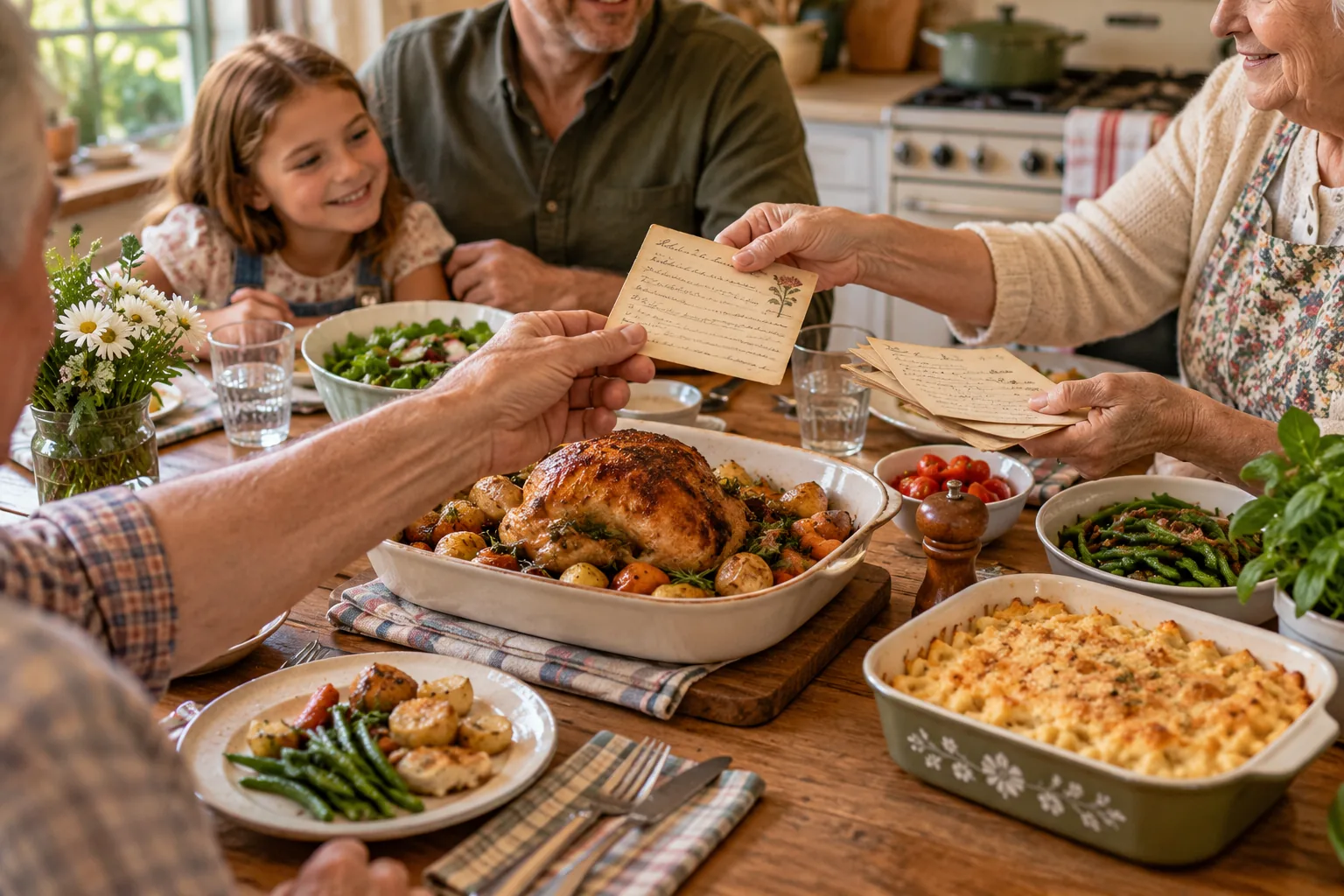
Food memories connect taste with people, places, celebrations, work, and household routines. A familiar dish can lead to a detailed story without requiring a formal history question.
Ask who, not only what
Instead of listing dishes, ask who cooked them, who sat where, and which meal marked the weekend. The person behind the recipe is often the strongest memory.
Include convenience and tradition
The 1950s kitchen could contain both long-practised family recipes and newer packaged foods. TV dinners, cake mixes, casseroles, and gelatine dishes can sit alongside roasts, stews, and home baking.
Use safe sensory cues
Menus, clean utensils, empty packaging, recipe cards, or photographs can prompt discussion without requiring food service. Consider allergies and dietary needs before using real ingredients.
Create a group recipe record
Write down favourite dishes and the stories attached to them. The result can become a small shared booklet rather than a competition about the “correct” recipe.
Begin with an ordinary meal
Celebration food can be memorable, but daily meals often reveal more about family life. Ask what appeared before work or school, what was packed for lunch, and which dish signalled the end of the week.
Invite detail about the room, table, timetable, and people. Who ate first? Was the radio on? Did everyone sit together? A simple breakfast may open a richer story than a list of famous 1950s dishes.
Follow food from shop to table
Shopping memories can include markets, local specialists, delivery rounds, rationing’s aftermath, growing food, preserving, and the spread of self-service. Experiences varied greatly by place and household income.
Use a shopping list, clean package, basket, or street photograph as a prompt. Ask what was bought often, what had to be saved for, and which shopkeeper or neighbour was part of the routine.
Make room for work and skill
Preparing food involved knowledge that was not always written down. A cook might judge by feel, adapt to what was available, stretch leftovers, or use a treasured utensil. Invite stories about learning, mistakes, and shortcuts as well as favourite recipes.
Include the work around the meal: lighting a stove, carrying shopping, washing dishes, preserving produce, setting the table, and cleaning afterward. Ask who did these tasks and whether that changed over time.
Use sensory prompts safely
Photographs, menus, recipe cards, clean utensils, fabric, or sealed empty packaging can support discussion without serving food. If ingredients or tasting are involved, follow individual dietary, allergy, swallowing, hygiene, and care guidance.
Introduce one smell or object at a time. Strong aromas can overwhelm or cause discomfort. Participation should be optional, and a person should never be asked to taste something simply because it is linked to a happy memory.
Ask questions with many possible answers
- Which meal marked a special day in your home?
- Who taught you something useful in the kitchen?
- What food did you avoid if you could?
- Which shop or market do you remember clearly?
- What smelled good while it was cooking?
- Was there a dish your family made differently from everyone else?
Asking about dislikes prevents the activity from becoming an idealised picture of the past. Humour about failed recipes or unpopular vegetables can be as connecting as a favourite cake.
Create a group recipe-and-story page
Choose one dish and record the variations people describe. Add who made it, when it appeared, and what accompanied it. Do not decide that one version is correct; regional and family differences are the point.
Use copied photographs and first names only when permission is clear. A printed page can be shared with families or displayed near the activity area according to the setting’s privacy policy.
Close without promising that food is therapeutic
Food reminiscence can be enjoyable and socially meaningful, but it is not treatment. If a topic brings grief, scarcity, conflict, or distress, acknowledge the feeling and offer another direction.
Finish with a neutral choice: another picture, a familiar song, or next week’s theme. The goal is a respectful conversation about real lives, not a perfect recreation of a decade.
Use a menu to bring several stories together
Create a pretend café or family menu with a starter, main dish, pudding, and drink chosen by participants. Ask what each item costs in memory, who would prepare it, and when it might be served. The menu can include foods from different cultures and decades. Nobody needs to eat the dishes for the activity to work. The result gives the group a shared object to revisit while preserving the variety of individual food memories.