
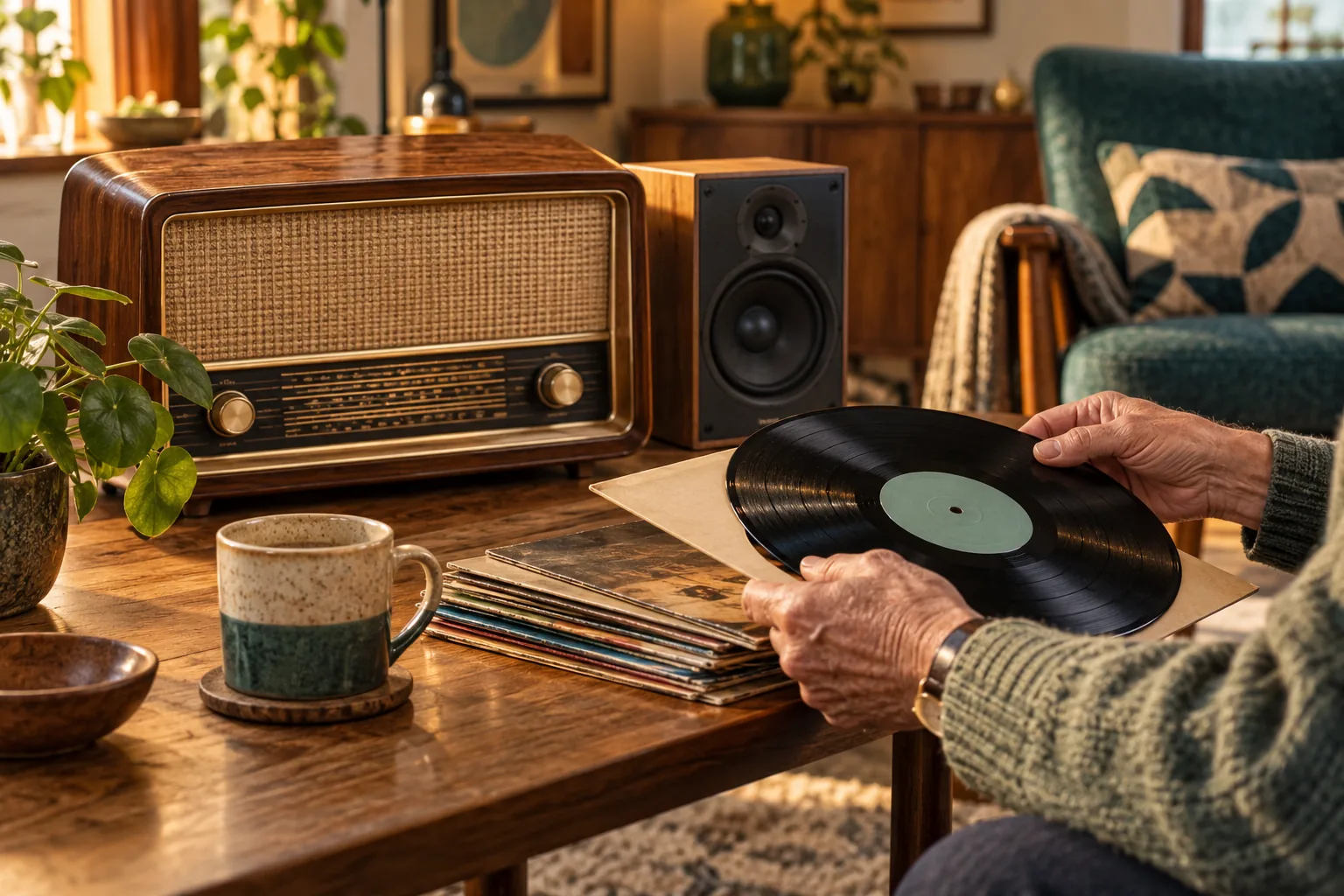
Music can provide an immediate shared starting point, even when conversation is difficult. Build the session around recognition and enjoyment rather than a quiz.
Choose variety
Include a crooner, an early rock-and-roll record, a doo-wop harmony, and a radio theme. Different people may connect with different sounds.
Use short excerpts
A minute or two is often enough. Ask where someone might have heard the song, whether they danced to music like it, or which voice they preferred.
Invite movement without pressure
Tapping a hand, moving a foot, conducting, or swaying in a chair can be as valuable as dancing. Keep volume comfortable and watch for signs of fatigue.
Finish with a favourite
Repeat the best-received song near the end. Familiarity helps the session feel complete and gives everyone another opportunity to join in.
Build the playlist around people, not charts
A list of decade hits is only a starting point. Include styles linked to different ages, cultures, regions, and settings. Radio themes, dance music, gospel, jazz, country, crooners, early rock and roll, film songs, and local favourites may all connect with someone.
Ask families or participants for suggestions before the session. A song released earlier may still have been popular in the 1950s, and a later recording may be the version a person knows best. Personal meaning matters more than a perfectly dated playlist.
Prepare six short selections
Choose more material than you expect to use, but plan to play only four to six excerpts. Note the title, performer, approximate era, and why you selected it. Keep an alternative ready if the first piece does not suit the group.
Preview each recording for sudden volume changes, spoken introductions, adverts, and sound quality. Download or queue material legally before the session so that technical searching does not interrupt attention.
Create a comfortable listening space
Place the speaker near the group rather than turning the volume up from across the room. Reduce other noise and check whether hearing devices create feedback. Ask whether the level is comfortable after the music begins.
Provide stable seating and room for feet and hands to move. Keep walking routes clear. Nobody should be expected to stand or dance to demonstrate enjoyment.
Use music in a simple sequence
- Welcome the group and explain that listening, talking, moving, or resting are all welcome.
- Begin with an accessible, familiar-sounding selection at moderate volume.
- Pause and ask one open question about where, when, or with whom music was heard.
- Change pace or style with the next excerpt rather than playing several similar songs.
- Invite optional movement such as tapping, conducting, swaying, or choosing an instrument sound.
- Repeat the best-received selection near the end.
Ask about the life around the music
“Where would you hear music like this?” may lead to a kitchen radio, dance hall, workplace, place of worship, cinema, car, or record shop. Ask who chose the music, how records were bought, and whether listening was private or shared.
Do not rush to name a song. Recognition can appear as a change in expression, humming, rhythm, or a story that seems unrelated. Follow the response rather than demanding the label.
Make movement optional and adaptable
Offer small actions that can be done seated: tapping fingers, lifting a scarf, moving a foot, or conducting the beat. Demonstrate once, then allow people to join or decline without comment.
Avoid rapid movements, heavy props, or activities that conflict with individual mobility guidance. Staff should know the setting’s safety procedures and adapt to each participant.
Notice emotion as well as enjoyment
Music can bring grief, longing, or difficult associations. If someone becomes uncomfortable, lower or stop the sound and offer a choice to continue, change the music, or leave the activity. Do not ask for the story behind a reaction.
End with something steady and familiar. Afterwards, record preferred songs, disliked pieces, comfortable volume, and any useful participation choices. Over time, the group playlist will become more personal and less dependent on assumptions about the decade.
Link songs without turning them into trivia
Between selections, offer one piece of context only when it helps: the kind of venue, a dance style, or the way the recording might have been heard. Then return to the group. Avoid asking for release years, chart positions, or performer names unless participants enjoy that detail. The music should support memory, preference, movement, and conversation. Facts can enrich the session, but they should never decide who has taken part successfully.