
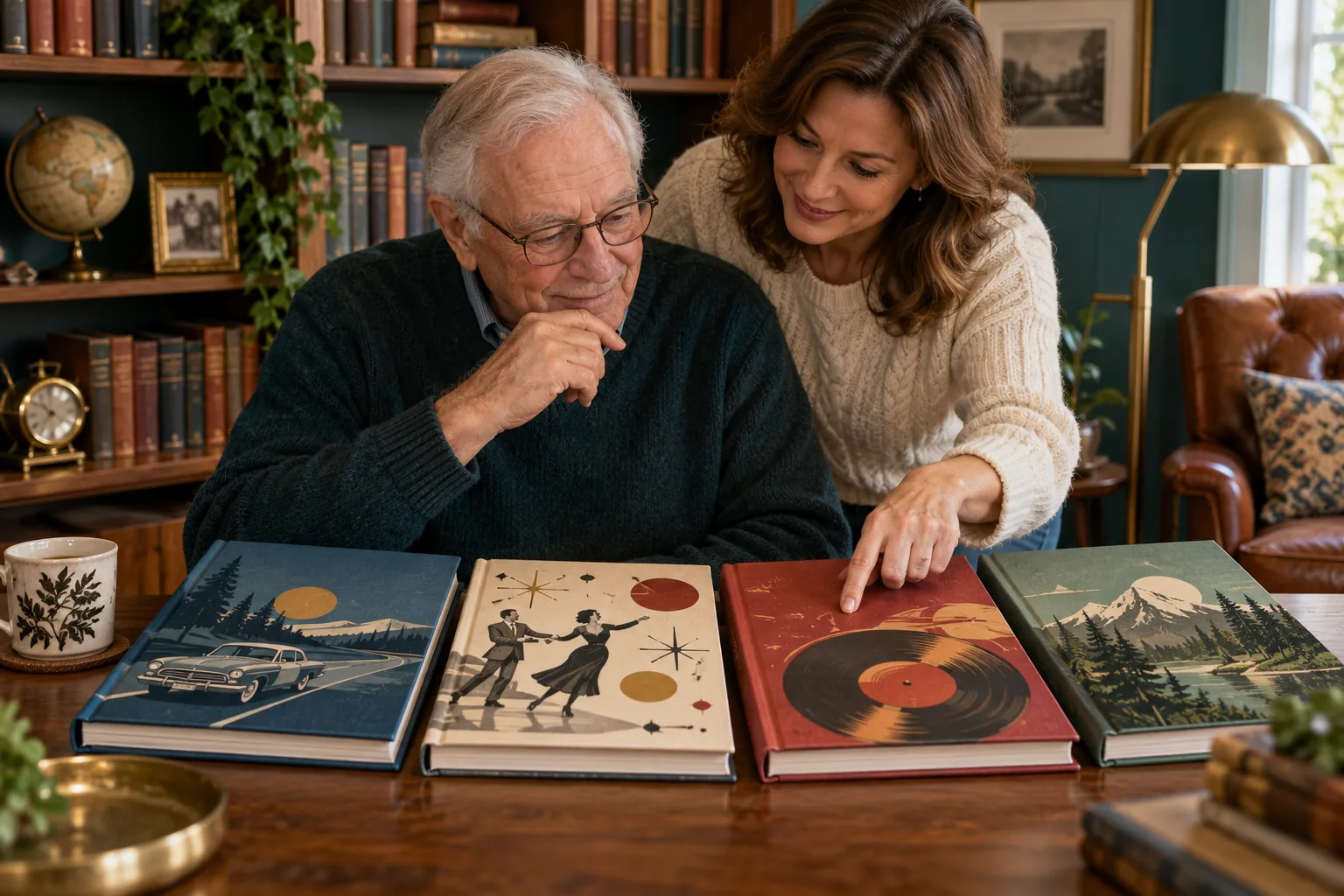
Choosing a nostalgia book can feel simple: find the decade in which someone was born and start there. In practice, the best choice is usually the decade that shaped the person’s everyday life. School days, first work, courtship, family routines, music, food, and travel may all point to different years.
A good book should invite stories without testing anyone’s memory. Use the questions below to choose a starting point that feels personal, comfortable, and enjoyable.
Start with the years that shaped them
Birth year is only one clue. Many people remember adolescence and early adulthood especially vividly because these years brought new independence, friendships, work, music, and changing fashions.
As a rough guide, subtract 15 to 30 years from the period you are considering. Would the person have been at school, beginning work, raising a family, or building a home then? Those life stages often produce rich conversation.
There is no rule. Someone may be fascinated by a decade they did not live through, while another person may prefer memories from later adulthood.
Follow interests, not stereotypes
Think about subjects that already make the person light up. A keen driver may enjoy cars, road trips, and roadside life. A music lover may connect with radio, records, dances, and favourite performers. A practical home-maker may prefer recipes, household objects, sewing, or gardening.
A broad decade book is useful because one topic can lead naturally to another. If fashion does not connect, food or sport might. The reader remains free to choose the path.
Consider where the book will be used
For a one-to-one visit, choose a book that can be opened anywhere and explored slowly. For a family gathering, look for varied topics that different generations can discuss. For a care-home group, clear pictures, short sections, and flexible prompts make it easier to include people with different abilities.
The Memory Lane Chronicles 1950s companion pages can extend a printed session with music, films, and trusted historical links. Preview digital material first and use only what suits the people present.
Check the reading experience
Content matters, but so does comfort. Look for clear headings, generous type, strong contrast, uncluttered pages, and images large enough to share. A book that stays open on a table can be easier to use than one that must be held tightly.
If sight, hearing, movement, or concentration varies, choose a format that supports rather than highlights those differences. Reading aloud, describing an image, or offering two topics to choose from can help.
Invite the person to choose
When possible, include the intended reader in the decision. Show two covers or describe two themes: “Would you rather look at the 1950s or the 1960s?” A simple choice gives the person control and may reveal an unexpected preference.
If the book is a surprise, ask another relative which stories they hear most often. You can also think about treasured objects, favourite songs, past jobs, holiday destinations, and photographs displayed at home.
Make the gift more personal
Add a note that removes any pressure: “I thought we might enjoy looking through this together.” Place a copied family photograph or a short list of favourite songs inside. The book then becomes the beginning of shared time rather than an assignment.
There is no single correct decade. Choose a promising doorway, notice what brings interest or pleasure, and follow the stories from there. Explore the Memory Lane Chronicles series to compare the available and planned editions.
Use a quick decision checklist
- Which years covered school, first work, friendships, courtship, or a first home?
- Which subjects already bring interest: music, food, sport, cars, clothes, films, or everyday routines?
- Will the book be used alone, with family, or in a group?
- Are the print, contrast, page layout, and physical size comfortable?
- Does the book invite opinion and stories rather than test names and dates?
- Can pages be skipped without losing the thread?
If several decades seem possible, begin with the one linked to the strongest combination of life stage and interest. The first book does not need to cover every important year.
Look for breadth within the decade
A useful book should include ordinary life as well as famous events. Kitchens, shops, transport, work, school, leisure, clothing, and neighbourhood routines create more chances for a personal connection.
Check whether the material allows different regional, cultural, and economic experiences. Nostalgia becomes less welcoming when it assumes that every household owned the same products or followed the same traditions.
Review the choice after using it
Notice which pages are revisited, which topics are skipped, and whether the reader prefers pictures, short text, questions, or companion media. Use those observations to choose another volume or theme.
The right decade is not fixed forever. Interest can change with mood, company, season, or a newly discovered family photograph. A good collection makes it easy to follow that curiosity.