
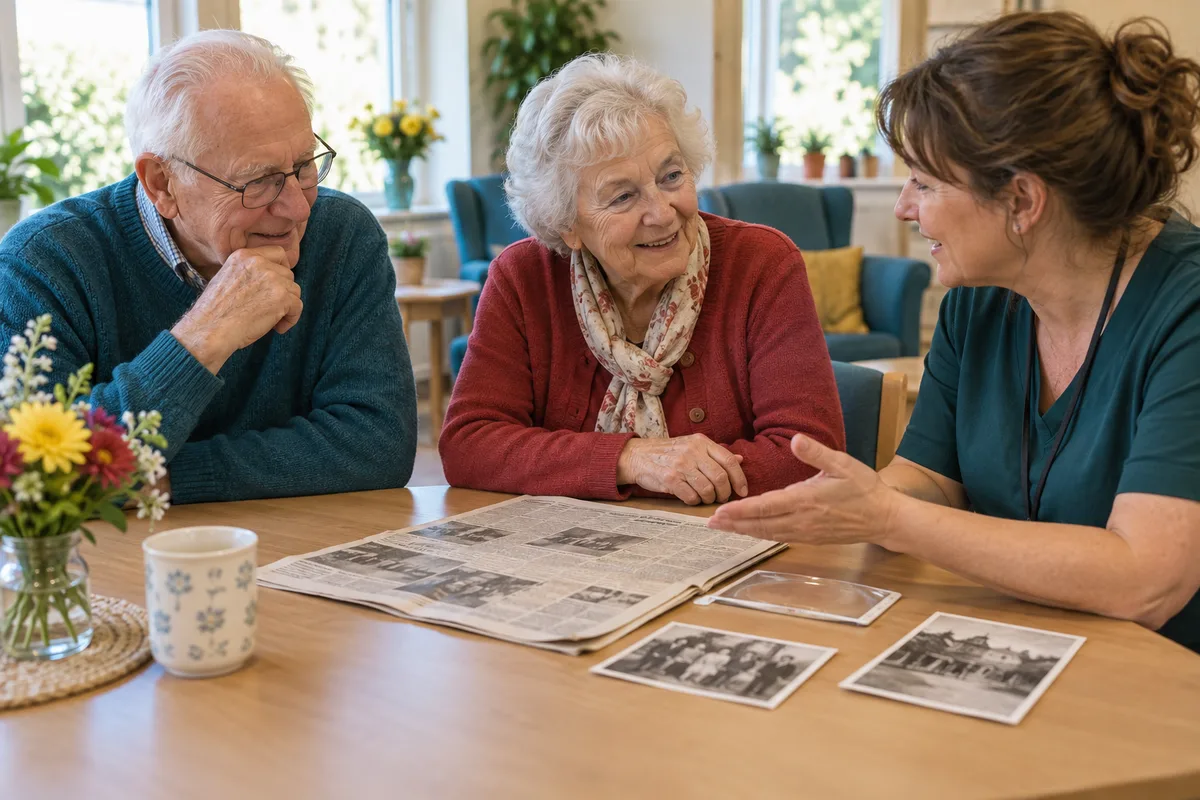
Family photographs can bring people close to places, relationships, and moments that still matter. They can also expose gaps and disagreements. One person may name an aunt, another may be sure it is a neighbour, and the date pencilled on the back may not settle the question.
The kindest response is usually curiosity, not correction. The purpose of looking together is to share attention and meaning. Accuracy can be researched later if it matters to the family record.
Choose a small, comfortable set
Begin with four to six photographs rather than a whole box. Include clear pictures of everyday scenes, such as a garden, kitchen, street, holiday, workplace, or family gathering. Avoid surprising someone with an image connected with grief, conflict, or trauma. Ask before using private photographs in a group.
Use copies whenever possible. The US National Archives provides practical guidance for protecting family papers and photographs. Copies reduce handling of fragile originals and make it easier to enlarge small details.
Describe before you ask
Offer one picture and allow time to look. Start with something visible: “There are three people standing beside a car,” or “The garden looks full of flowers.” Then invite a response: “What do you notice?” or “What does this scene make you think about?”
Avoid rapid questions such as “Who is that?”, “Where was this?” and “What year was it?” Even when asked warmly, a sequence of factual questions can feel like an examination. If names matter, try “I wonder who this might be” and accept that the answer may remain open.
Respond to uncertainty with respect
If the person gives a name that differs from the family label, you do not need to say, “No, that is wrong.” Try, “She seems important to you,” “Tell me about her,” or “That face brings someone to mind.” These replies acknowledge the feeling without confirming a fact you do not know.
When two relatives disagree, record both possibilities: “Possibly Ruth or Jean, family views differ.” Memories, captions, and inherited stories can all contain mistakes. A careful family archive leaves room for uncertainty rather than replacing one confident answer with another.
Follow the story beyond the frame
A photograph is useful even when nobody is recognised. Clothing may prompt talk about sewing or school uniforms. A front step may lead to stories about neighbours. A table may bring back meals, manners, or celebrations. Ask about sounds, routines, journeys, and choices that are not visible in the image.
Let the person change the subject. A wedding photograph might lead to music, work, rationing, or a difficult relationship. The conversation belongs to the people taking part, not to the photograph.
Know when to pause
Put the picture aside if someone becomes tense, tearful, withdrawn, or repeatedly says they do not know. Acknowledge the feeling without pressing for an explanation: “We can leave that one,” or “Thank you, we do not need to work it out.” Offer a familiar drink, quieter subject, or simple present-day activity.
The Alzheimer’s Society notes that reminiscence can be enjoyable and support identity and social interaction, while also warning that difficult memories may return. Comfort and consent should guide the session.
Include people who are not in the picture
Family collections often preserve some lives more fully than others. The person taking the photograph is usually invisible. Relatives who lived far away, could not afford a camera, avoided being photographed, or were excluded from the family record may be missing.
Ask, “Who else was important at this time?” or “Who might have been behind the camera?” Add a separate note for people whose stories belong with the image even when their faces do not. This turns the album from a roll call of visible people into a fuller record of relationships.
Label carefully after the conversation
Write notes on a separate sheet or use an archival-safe system rather than marking the front of an original. Include who supplied the information and the date it was recorded. Distinguish known facts from possibilities and personal interpretations.
End by letting the person choose a favourite image or decide which one to see next time. A photo session does not need a solved mystery. Looking together, hearing what matters, and protecting the person’s dignity are valuable outcomes in themselves.