
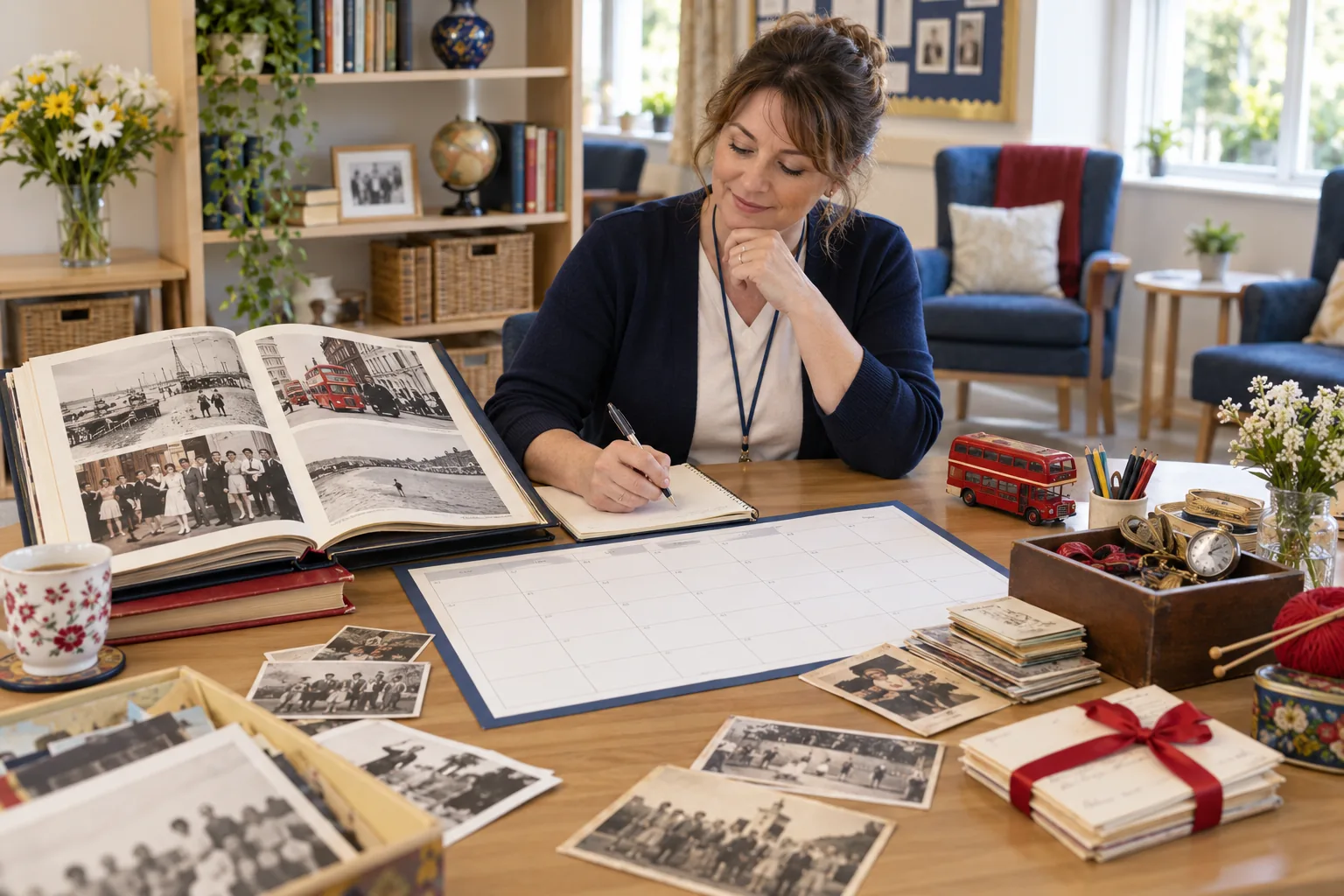
A single nostalgia book can support a full month of varied activities. The key is to change the way people take part. One week may focus on conversation, another on music, another on objects, and another on making something together.
Use this four-week plan as a framework. Adapt group size, length, and materials to residents’ preferences, support needs, and daily energy.
Before the month begins
Choose one broad chapter such as music, food, travel, clothes, or everyday life. Read it in advance and mark six to eight pages with clear images or useful prompts.
Ask colleagues and families whether there are relevant interests, cultures, jobs, or experiences to include. Check all media, objects, food, movement, and outings against the home’s policies and individual care plans.
Week 1: look, choose, and talk
Display two or three images at a time. Invite residents to choose which one to explore. Use open prompts: “What do you notice?”, “Where might this be?”, or “Would you have liked this?”
Keep the session to about 30 minutes unless the group clearly wants longer. End by asking which part of the theme should return next week.
Week 2: add sound and rhythm
Select three short audio clips linked to the chapter. For a travel theme, try a train sound, a road song, and seaside music. For a home theme, use a radio signature tune or familiar dance number.
Offer several ways to join: listen, hum, tap, conduct, choose a favourite, or describe where the sound might be heard. Keep volume comfortable and avoid playing one clip for too long.
Week 3: handle and create
Bring a small set of safe objects, copies, or textures. A clothing session might include fabric and buttons. A travel session might use postcards, a blank map, and an old-style suitcase label.
Create something simple together: a collage, group menu, memory map, display, or list of favourite sayings. Participation can mean choosing a colour or placing one picture; it does not require fine craft skills.
Week 4: make a shared story
Review the month’s favourite image, sound, and object. Invite the group to build a short page called “What we noticed” or “Our travel memories.” Include comments only with permission.
Finish with a familiar element from an earlier week. Repetition can provide a satisfying sense of return while the shared page gives the month a clear ending.
Offer alternatives in every session
Some residents will want to tell long stories. Others may listen, point, sing, sort, or leave early. Set out a quieter table or offer the theme one-to-one later so that the main group is not the only route to participation.
Avoid correcting memories or insisting that the group stay on topic. If a page about cars leads to a story about a first job, that story is the activity.
Reuse the framework
Next month, choose another chapter and repeat the four modes: look and talk, listen, handle and create, then make a shared record. The structure stays familiar while the content changes.
The Memory Lane 1950s guide and companion pages organise ten themes in one place, making it easier to plan ahead without turning the sessions into tests.
Build a reusable planning sheet
For each week, record the purpose, main prompt, optional media, materials, accessibility adaptations, safety checks, and closing activity. Add a backup plan that can run without internet access or special equipment.
Keep the plan flexible enough for a smaller group or a one-to-one visit. Staff shortages, changing health, and room availability should not make the whole activity unusable.
Balance familiarity with variety
Use the same welcome and ending each week while changing the main way people participate. Familiar structure can reduce uncertainty; varied content prevents the month from feeling repetitive.
Return to a popular song or image when participants request it. Repetition chosen by the group is different from repeating material because no alternatives were prepared.
Include families and colleagues carefully
Invite suggestions for music, photographs, occupations, languages, and local places. Ask for copies rather than irreplaceable originals, and obtain permission before sharing personal material.
Brief colleagues on the open-question approach so residents are not tested after the session. A shared method makes the month feel coherent across shifts and facilitators.
Evaluate what was meaningful
Do not judge success only by attendance or the number of stories told. Note choice, attention, enjoyment, comfort, interaction, and whether people asked for the theme again.
Use this evidence to plan the next month. Keep what supported participation, remove what created pressure, and let residents influence the next chapter or decade.