
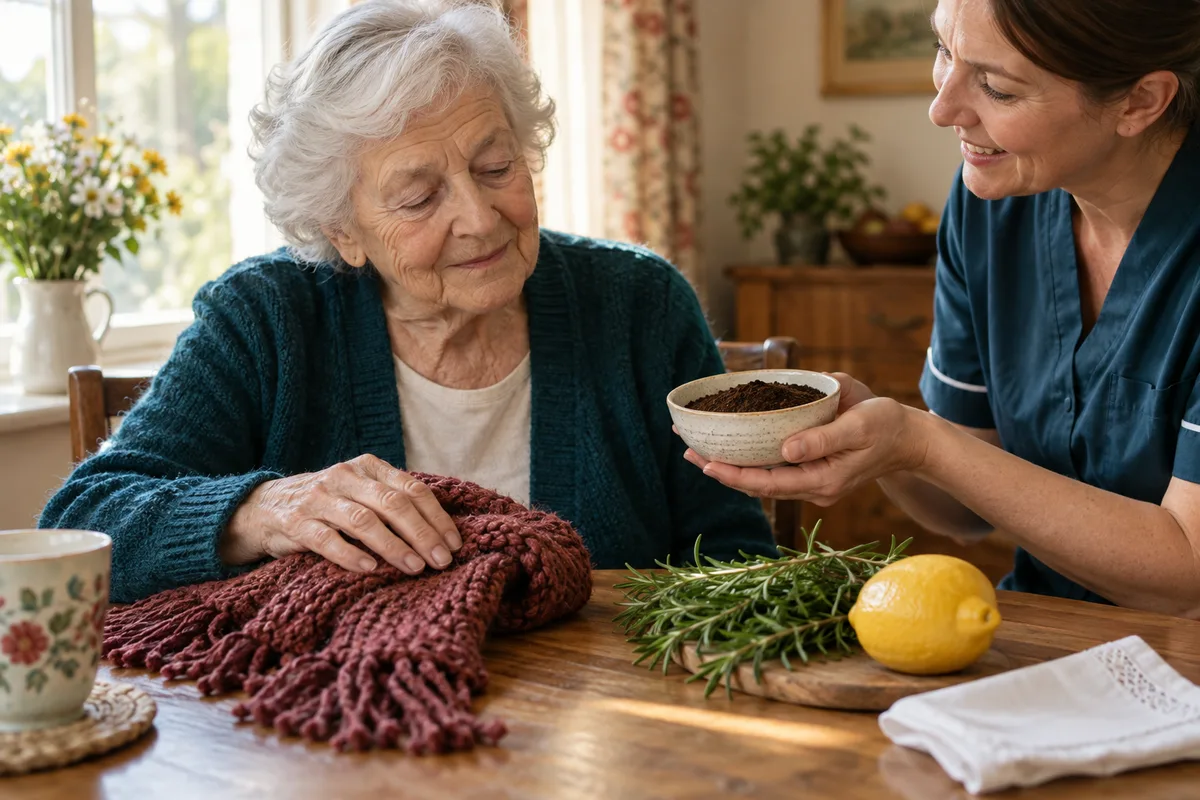
A sensory memory session can begin with the feel of knitted wool, the scent of rosemary, the smooth handle of a wooden spoon, or the rustle of tissue around a bar of soap. These prompts do not depend on reading, recalling a date, or naming an object. They offer a simple experience in the present, and a memory may or may not follow.
The key is restraint. More materials do not make a better session. One carefully offered sensation, followed by time to respond, is usually more comfortable than a crowded table of competing smells, colours, and textures.
Check the person and the setting first
Ask about allergies, asthma, skin sensitivity, swallowing risks, cultural preferences, and strong dislikes. Follow the care setting’s infection-control guidance. Do not use essential oils, perfumes, powders, unlabelled products, or anything intended to be tasted. Avoid materials that shed fibres or contain small loose parts when these could be unsafe.
Choose a quiet, well-lit space with a clear table. Keep a plain tray for the current item and a covered box for everything else. This reduces visual clutter and makes it easier to stop promptly if a smell or texture is unwelcome.
Prepare a small, familiar collection
A useful set might include a square of cotton, a piece of knitted wool, a smooth wooden object, a clean pastry brush, a sealed bar of traditional soap, a lemon with unbroken skin, and fresh rosemary in a small jar. Select only three or four for one session.
Familiarity is personal. Lavender may suggest a garden to one person and an unpleasant institutional smell to another. Wool may recall a favourite jumper or an itchy school uniform. Never assume that a sensory prompt will produce a particular emotion.
Offer choice before contact
Show the item first and explain what it is. Ask, “Would you like to hold this, smell it from here, or just look?” Bring scents gradually from a distance. Do not place anything under a person’s nose or into their hands without agreement.
Use language about the present before asking about the past: “Is that rough or soft?”, “Is the scent strong enough from there?” or “Which of these two fabrics feels more comfortable?” These are genuine choices. If a memory appears, follow it gently with “Tell me more” rather than a string of questions.
Use a slow 20-minute structure
- Opening: explain that everyone can touch, smell, watch, or pass.
- Prompt one: offer a texture and allow quiet time.
- Prompt two: introduce a mild natural scent only after the first item is put away.
- Prompt three: compare two familiar materials, if attention remains comfortable.
- Closing: invite a simple preference, then wash hands if needed.
In a group, move at the pace of the person who needs the most time. Side conversations can make it hard to hear instructions, so ask participants to take turns. Someone who watches with interest is participating, even if they do not speak.
Notice signs that it is time to change course
A person may turn away, push an item aside, cough, rub their hands, become restless, or say the prompt is unpleasant. Remove it without discussion and return to a neutral activity, such as looking at a picture or sharing a drink. If distress continues, stop the session and follow the person’s usual support plan.
Positive responses can also be quiet: relaxed shoulders, longer attention, stroking a fabric, or choosing to keep an item nearby. Do not measure success only by the number of memories or words.
Keep brief notes for the next session
Afterwards, record only practical information that will improve future activities: which materials were welcomed, which were declined, the best time of day, and whether the person preferred touch, scent, conversation, or observation. Follow the setting’s privacy policy and do not turn an informal activity into a detailed personal record without consent.
Use those notes to offer continuity. If rosemary prompted interest in gardening, a later session might use seed packets or garden photographs. If wool was uncomfortable, choose cotton or wood next time. Adaptation shows that the person’s response was heard.
Keep it person-led
National Institute on Aging guidance advises matching activities to what a person can do, helping them begin, watching for frustration, and allowing them simply to observe. The Alzheimer’s Society activities handbook likewise emphasises meaningful, adaptable activities and sensitivity to difficult memories.
A calm sensory session is not a test of memory and it is not a treatment. It is a shared experience built around consent, comfort, and curiosity. When those three things guide the pace, a small piece of fabric or sprig of rosemary can be enough.