
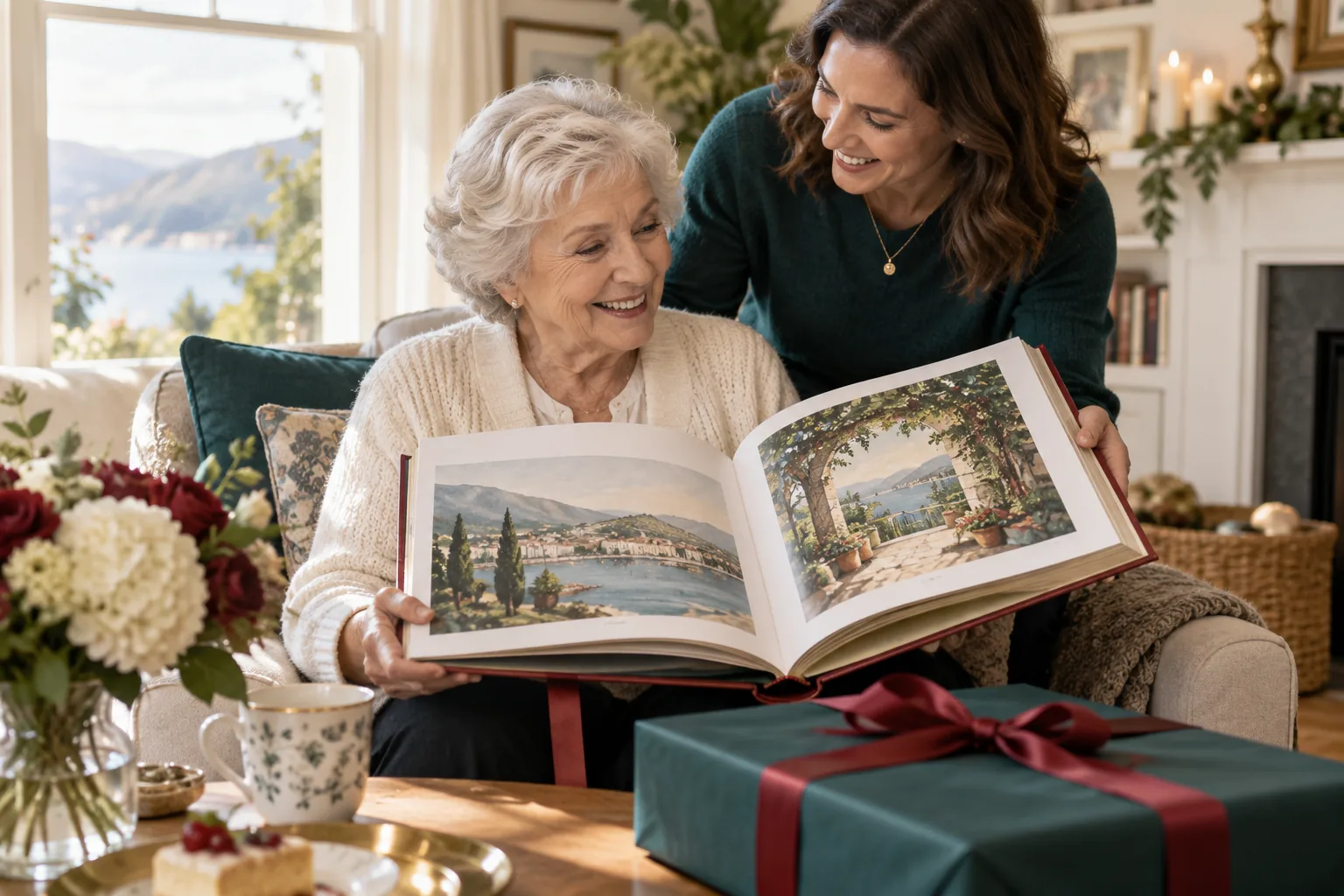
Buying for an older relative can be difficult when they say they need nothing. A nostalgia book offers something different from a decorative gift. It provides enjoyable reading, familiar images, and a reason to spend time together.
The best choice is not simply “a book for seniors.” It is a book that respects the reader’s interests and makes browsing comfortable.
It gives conversation a natural starting point
Direct questions such as “Tell me about your past” can feel too broad. A page about school, music, food, or travel offers a smaller doorway. The reader can comment on the picture, disagree with the description, or follow the subject into a personal story.
There is no need to read from beginning to end. Opening at random can make each visit feel different.
Large print supports shared reading
Generous type, strong contrast, clear headings, and short sections can reduce effort for many readers. They also make it easier for two people to look at the same page.
Large print does not replace appropriate glasses, lighting, or professional advice about changes in sight. It is simply one part of a comfortable reading experience.
It can include people who do not identify as readers
A visual, topic-led book can be enjoyed in short visits. Someone may prefer photographs, captions, or conversation prompts to long passages. Another person may listen while a family member reads aloud.
This flexibility matters when energy, concentration, or confidence changes from day to day.
It feels personal without being intrusive
Choose a decade linked to the recipient’s formative years or a subject they already enjoy. Music, cars, films, home life, sport, fashion, and food all provide clues.
Avoid assuming that every person remembers an era fondly. Give the recipient freedom to skip a page, correct the book, or say that their experience was different.
It continues beyond the day it is opened
A good nostalgia book can support family visits, quiet reading, group activities, and video calls. Place a copied photograph or handwritten note inside to connect the published material with the family’s own history.
Companion resources can add music and moving images, but the book remains useful without a screen. That balance suits homes and care settings with different levels of technology.
Give time with the book
When you present the gift, offer to explore a few pages together. Say, “I wondered what you would think of this,” rather than “Let’s see what you remember.” The first wording invites an opinion; the second can sound like a test.
Browse the Memory Lane Chronicles collection for large-print decade guides designed to begin conversations with seniors, families, caregivers, carers, and activity leaders.
Check the book before giving it
Look beyond the words “large print” on the cover. Open several pages and check type size, contrast, spacing, glare, picture quality, and the weight of the book. Decorative backgrounds should not compete with the text.
Read a sample aloud. The language should sound adult, respectful, and natural. Prompts should invite stories or opinions without treating the reader like a pupil.
Match the format to the person
A lighter book may be easier to hold, while a larger book may be better for sharing on a table. Someone who tires quickly may prefer short sections. Another reader may value detailed captions and historical context.
Consider lighting, seating, and whether a book stand or magnifier is already used. Large print is helpful only when the whole reading setup is comfortable.
Avoid gifts built on assumptions
Age does not define taste. Check the recipient’s interests and formative years rather than choosing the oldest-looking cover. A person may prefer a later decade, a specific subject, or an activity guide for sharing with others.
If you are unsure, include a gift receipt or offer two choices. Giving control is more thoughtful than insisting that a particular book should make someone nostalgic.
Add a plan to share it
Write a note offering a visit, call, or afternoon together. Suggest one page or theme rather than expecting the recipient to read the book immediately.
A well-chosen nostalgia book has lasting value because it can be reopened with different people. The gift is the book; the deeper benefit may be the invitation to spend time with it together.